

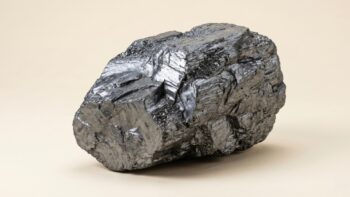
In the hills of Cumbria in the 1560s, shepherds stumbled on a black mineral that could mark sheep, line cannonball moulds, and later allow people to write. It was graphite, so pure it could be sawn into sticks and used straight from the ground. Nowhere else in the world held a deposit like it.
The British Crown noticed. Armed guards were posted. Mining was limited to a few weeks a year. Shipments travelled under armed escort to London. For the next two centuries, if you wanted a pencil, you needed a piece of Borrowdale graphite.
Then, in 1795, Nicolas-Jacques Conté who was a French army officer with a chemistry background, destroyed the whole business with a recipe.
This is a disruption story about how markets can be turned on their heads. Let’s walk through what happened, and what product managers can take from it.
The monopoly that looked unbreakable
Borrowdale had the only commercially viable deposit of pure, solid graphite on the planet. That advantage shaped everything:
- The product was the raw material. A pencil was just a sliver of rock wrapped in wood.
- Supply was finite and geographically captive. Britain had it. Nobody else did.
- The economics rewarded scarcity. The tighter the control, the higher the price.
If you’d written a product strategy in 1790 about breaking into the pencil market, the obvious move would have been to find another graphite deposit. That’s how incumbents and challengers alike framed the problem: how do we get more of the magic rock?
This is the first thought-trap worth noting. When your position depends on a specific resource, a specific feature, or a specific channel, your entire view of the market risks narrowing to that thing. You stop seeing alternatives. You stop imagining a world where the resource doesn’t matter.
The catalyst to disruption
Britain blockaded France during the Napoleonic Wars. French engineers, artists, and draughtsmen ran out of pencils. Lazare Carnot, the minister responsible for war production, turned to Nicolas-Jacques Conté and asked for a domestic solution.
Conté did not try to find French graphite. He reframed the problem.
Instead of asking where can we dig this up?, he asked what does the pencil actually need to do? The answer was: make a controlled mark on paper. Purity was a means, not an end.
Within days he had his method. It was to grind lower-grade graphite into powder, mix it with clay, press it into rods, and fire the rods in a kiln. A similar process had already emerged in Austria with Joseph Hardtmuth around 1790 (leading to Koh-I-Noor Hardtmuth).
The raw-material constraint had been bypassed by going back to first-principles thinking and a some smart chemistry.
Why the substitute was better than the original
Here’s where the story gets interesting for anyone building products today. Conté’s composite wasn’t just “good enough.” It was objectively superior in ways the pure-graphite incumbents couldn’t match.
- Grade control. By varying the ratio of clay to graphite, you could produce a whole range of hardnesses, from soft and smudgy to fine and precise. The graphite grading system (i.e. HB, B, H…) we still use traces directly back to this. Pure graphite was one thing. Composite graphite was a product portfolio.
- Consistent quality. A kiln produces predictable output. A natural graphite deposit does not. Two pencils off the same production run behaved the same way; two chunks of graphite might not.
- Scalable supply. Impure graphite is widespread. Once you could purify and blend it, the supply question dissolved.
- Lower unit cost. Manufacturing beat mining on price once the method was proven.
Pure graphite kept a niche at the top of the market as artists still wanted the best. But the mass market moved on. By the mid-1830s, even Keswick’s pencil makers, sitting right next to the Borrowdale mines, were switching to the clay-and-graphite method. The last Borrowdale mining company went into liquidation in 1891. By 1906, the story was over.
Six lessons for product managers
The pencil story is unusual in that it compresses nearly every classic disruption dynamic into a tight, well-documented arc. A few points worth thinking about:
1. A moat built on a single resource is a moat with one gate
If your product’s defensibility rests on one supplier, one dataset, one model, or one distribution channel, you are one creative chemist away from irrelevance. Inventory your dependencies honestly, and ask which of them a determined challenger could route around.
2. Constraints drive the best reframing
Conté didn’t invent the modern pencil in a lab with unlimited resources. He invented it because France had no graphite and a war to fight. When your team hits a wall like budget, headcount, API limits, or regulatory friction, resist the urge to wait it out. The constraint might be where the better product is hiding.
3. Disruption often comes from an adjacent discipline
The pencil wasn’t disrupted by a better miner. It was disrupted by a chemist. Watch the adjacent fields that don’t sound like your industry, but share a customer problem. That’s where the substitute could be built, often without anyone calling it a competitor yet.
4. The disruptor often looks inferior at first
Conté’s early pencils had detractors. Purists pointed at the grittiness, the inconsistency of early batches, the unfamiliar feel. The incumbents were right on the specifications that mattered to them. They were wrong about which specifications would matter to the market five years out. When you hear your team dismissing a competitor as “not really comparable,” dig into why. Sometimes it could be true. Sometimes it’s the sound of the market moving under your feet.
5. The features you can’t offer are the features your competitor will sell hardest
Pure graphite couldn’t produce grades. So Conté built his entire product story around grades. If there’s a capability your architecture or supply chain makes impossible, assume a competitor is already positioning against you on that exact axis.
6. Even the incumbent eventually adopts the substitute
Keswick was the home of the Borrowdale industry. Even they switched to the clay method within a few decades. This is the pattern. Incumbents rarely die refusing to adopt the new approach. They usually adopt it too late, after the margin has collapsed and the brand premium has gone. Moving early costs you pride. Moving late costs you the business.
Where could your product disruption be?
What’s the “pure graphite” in your current product? The thing you treat as irreplaceable, the thing your strategy assumes will always be stable or scarce and always be yours?
Leave a comment